
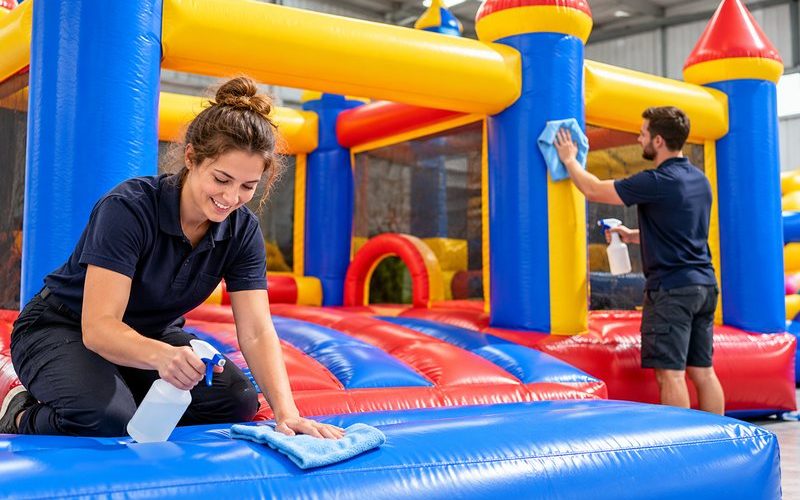
Bouncy castles are a familiar sight at children’s birthday parties, school fetes and community events across the UK. While children enjoy bouncing and playing, few people think about what happens to the inflatable after the party ends.
Grass, mud, dust, food crumbs and other debris can quickly accumulate, particularly when a castle is used outdoors. With commercial inflatables moving between different venues, regular cleaning is an important part of keeping equipment in good condition.
Cleaning a bouncy castle involves more than wiping away visible dirt. Proper cleaning, suitable disinfection when needed, thorough drying and regular inspection all help prepare the equipment for its next event.
So, how do professional hire companies clean bouncy castles between bookings, and what should parents know about the process?
Why Is Regular Bouncy Castle Cleaning Important?
Bouncy castles are designed for repeated use, often at several events throughout the week.
Even when children follow the rules, dirt and debris can collect on bouncing surfaces, entrance steps and slide areas. Outdoor events may leave grass, sand or mud behind, while indoor parties can introduce dust, paper decorations and food crumbs.
Regular cleaning helps prevent this material from building up, particularly in corners and around stitched seams.
It also makes the inflatable more pleasant to use and gives operators an opportunity to identify signs of wear or damage.
For hire businesses, cleaning is therefore part of both everyday hygiene and equipment maintenance.
Step 1: Inspecting the Inflatable After an Event
The cleaning process usually begins with a visual inspection.
Before folding the castle away, operators should look for loose objects, visible dirt, spills and signs of damage.
Entrance areas, bouncing floors and slide exits deserve particular attention because they experience frequent contact during use.
Small toys, sweet wrappers and other objects should be removed before packing.
If the inflatable has been used on wet grass or exposed to rain, the operator should also check for moisture around the base and within folds.
This initial assessment helps determine whether routine cleaning is sufficient or whether more thorough attention is required.
If significant damage or contamination is discovered, the inflatable may need to be taken out of service until the issue has been addressed.
Step 2: Removing Dirt and Cleaning the PVC Surface
Most commercial bouncy castles are manufactured using reinforced PVC-coated fabric, which can generally be cleaned with suitable products.
The first step is removing loose dirt using a soft brush, clean cloth or suitable vacuum cleaner.
Working from one section to another helps prevent debris from being spread across the inflatable.
Once loose material has been removed, the surface can be cleaned using a mild cleaning solution compatible with the manufacturer’s recommendations.
A soft sponge or cloth is usually more appropriate than abrasive scrubbing equipment.
Particular attention should be given to high-contact areas, including:
- Bouncing floors and entrance steps
- Slide surfaces and landing areas
- Climbing sections and handholds
- Corners where debris may accumulate
Harsh solvents, abrasive cleaners and unsuitable chemicals should be avoided because they may damage PVC coatings, printed artwork or other components.
The aim is to remove dirt effectively without affecting the inflatable’s materials or construction.
Step 3: Disinfecting When Necessary
Cleaning and disinfecting are different processes.
Cleaning removes visible dirt and other unwanted material, while disinfection uses a suitable product to reduce microorganisms on treated surfaces.
For commercial inflatables used by different groups of children, disinfection may be appropriate as part of the operator’s hygiene procedures, particularly after contamination or incidents involving bodily fluids.
The product must be suitable for use on PVC-coated fabric and applied according to its instructions.
This includes following the recommended dilution, contact time and any rinsing requirements.
Applying stronger chemicals or using larger quantities doesn’t necessarily improve the result. It may instead damage the material or leave unwanted residues.
Surfaces should be cleaned before disinfection where required by the product instructions, and children must not use the equipment until it is safe to do so.
Hire companies should follow the manufacturer’s cleaning guidance and use products appropriate for the inflatable.
Step 4: Drying the Bouncy Castle Thoroughly
Drying is one of the most important parts of inflatable care.
Even when the visible surface appears clean, moisture can remain around stitched seams, underneath the bouncing floor or inside folded sections.
Storing a damp inflatable can encourage mould and mildew, cause unpleasant odours and leave stains that become difficult to remove.
For this reason, a bouncy castle should be thoroughly dried before storage.
Operators may remove excess moisture with clean cloths and keep the inflatable inflated in a suitable, dry environment while remaining damp areas are checked.
The exact drying method depends on the equipment and manufacturer’s instructions.
During colder months, drying can take longer because of lower temperatures and increased humidity.
For hire companies operating throughout the British winter, access to a suitable indoor drying area can be particularly useful.
What Happens If a Bouncy Castle Gets Wet?
Outdoor events can leave inflatables damp, even when heavy rain has been avoided.
Moisture may come from wet grass, light rain or condensation, especially during autumn and winter.
If a castle becomes wet, it should be assessed and dried according to the manufacturer’s instructions before being returned to storage.
Sometimes, equipment must be transported while still damp. In these circumstances, the inflatable should be unpacked and dried as soon as practical rather than left folded in a storage bag.
Prolonged damp storage can create conditions that encourage mould and material deterioration.
If mould or significant staining is discovered, operators should use an appropriate cleaning procedure and assess whether the equipment remains suitable for use.
Drying the inflatable properly is often easier than dealing with the problems caused by storing it wet.
Can Cleaning Help Identify Damage?
Cleaning provides a useful opportunity to examine areas that may not be obvious during normal operation.
While wiping the surface, operators may notice loose stitching, small tears, damaged seams or worn material.
High-contact areas such as entrance steps, bouncing floors and slide sections are particularly important because they experience repeated use.
Anchoring points and inflation tubes should also be checked as part of the equipment’s maintenance routine.
Any damage that could affect safe operation should be assessed and repaired appropriately before the inflatable is used again.
The UK Health and Safety Executive advises operators to carry out checks before use and ensure that commercial play inflatables receive appropriate periodic inspections.
Cleaning does not replace formal safety inspections, but it can help identify problems before they become more serious.
How Do Hire Companies Store Bouncy Castles Between Bookings?
Once an inflatable is clean and dry, it should be folded carefully and stored in a suitable location.
Commercial bouncy castles can be large and heavy, so careful handling helps reduce unnecessary stress on the fabric and seams.
Storage areas should be clean, dry and protected from conditions that could damage the equipment.
The blower, electrical cables and other accessories should also be maintained and stored appropriately.
Before the next booking, the operator should confirm that the inflatable is in suitable condition and that the required installation equipment is available.
A clean castle must still be correctly installed, anchored and checked before children are allowed to use it.
For parents organising a party, asking a hire company about its cleaning and maintenance procedures is entirely reasonable.
A professional operator should be able to explain how equipment is prepared between events.
Final Thoughts
Keeping a commercial bouncy castle clean involves more than removing dirt after a party. Regular inspection, suitable cleaning products, appropriate disinfection and thorough drying all help maintain the inflatable in good condition.
For hire businesses, consistent cleaning and storage practices help protect equipment from unnecessary wear and make it easier to identify potential problems. For families, a clean, well-maintained bouncy castle contributes to a more enjoyable party experience.
With proper care and regular safety checks, commercial bouncy castles can remain ready for repeated use at birthday parties, school fetes and community events throughout the year.