
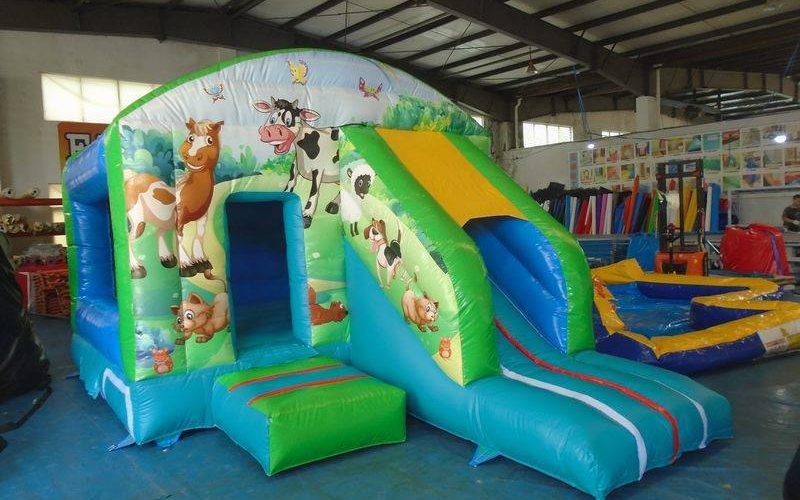
Bouncy castles are a familiar sight at children’s birthday parties, school fetes and community events across the UK. With their colourful designs and inflatable structures, they may look relatively simple, but manufacturing a commercial bouncy castle involves much more than stitching fabric together and filling it with air.
Commercial inflatables are designed for repeated use, which means their materials, construction and structural reinforcement must withstand regular bouncing, inflation, deflation and transportation.
From the initial design to the final inflation test, each stage of production contributes to the inflatable’s durability, performance and safety.
So, how are commercial bouncy castles actually made? Let’s explore the manufacturing process and the features that distinguish a well-constructed inflatable.
1. Designing the Bouncy Castle
Every commercial bouncy castle begins with a design.
Manufacturers consider the intended users, overall dimensions, bouncing area and structural features before production starts.
A traditional bouncy castle may have a relatively straightforward layout, while a combination inflatable with slides, climbing steps or decorative features requires more detailed planning.
The design must also account for entrance and exit arrangements, protective walls, anchoring points and the required operating pressure.
For commercial play inflatables intended for the UK market, the relevant provisions of BS EN 14960-1 provide important safety requirements for design and manufacture.
Once the design is finalised, the individual fabric panels are prepared for cutting.
2. Selecting Materials for Commercial Use
Material selection plays a major role in the durability of a commercial bouncy castle.
Most commercial models are manufactured using reinforced PVC-coated fabric rather than the lightweight materials commonly found in small domestic inflatables.
This material generally consists of a woven reinforcement layer covered with PVC, combining strength with resistance to moisture and everyday wear.
Commercial manufacturers commonly use PVC materials around 0.55mm thick, although the exact specification depends on the inflatable’s design and intended application.
Some areas may require additional reinforcement, particularly where children frequently climb, bounce or slide.
The fabric must also meet the relevant strength and fire-performance requirements applicable to the equipment.
However, thicker material doesn’t automatically mean a better bouncy castle. The quality of the stitching, structural design and reinforcement methods is equally important.
3. Cutting the PVC Fabric
A commercial bouncy castle is constructed from numerous individual fabric panels rather than one large sheet of material.
These panels form the bouncing floor, side walls, inflatable columns, entrance and other structural elements.
Manufacturers prepare cutting patterns based on the approved design, ensuring that the different sections can be assembled accurately.
Computer-guided cutting equipment may be used to improve consistency, particularly when producing complex shapes or multiple units.
Accurate cutting is important because even relatively small errors can affect the final dimensions and alignment of the inflatable.
For themed bouncy castles, printed artwork and decorative panels may also be prepared before assembly.
Once the panels have been cut and organised, the main sewing process begins.
4. Stitching and Reinforcing the Structure
Stitching is one of the most important and labour-intensive stages of commercial bouncy castle manufacturing.
Heavy-duty industrial sewing machines are used to join the PVC panels and create the inflatable’s internal and external structures.
Depending on the design and expected loads, structural seams may require multiple rows of stitching, reinforced fabric or additional webbing.
Particular attention is given to areas that experience repeated movement and stress.
These commonly include the connections between the bouncing floor and walls, entrance sections, climbing features and other heavily used areas.
Commercial inflatable manufacturers such as East Inflatables use reinforced PVC construction and multiple stitching techniques, selecting the appropriate reinforcement methods according to the product’s structure and intended use.
The objective is to produce strong, reliable connections that can withstand repeated commercial operation.
Unlike sealed-air inflatables, most traditional bouncy castles are not completely airtight. Small amounts of air can escape through their stitched seams, which is why they require a continuously operating blower.
5. Adding Slides, Mesh Panels and Anchoring Points
After the main structure has been assembled, manufacturers add the functional and decorative features included in the design.
Depending on the model, these may include inflatable slides, climbing steps, mesh windows, decorative columns and themed artwork.
Combination castles generally require more complicated assembly because the bouncing and sliding sections must connect correctly.
Mesh panels can improve visibility into the play area and form part of the inflatable’s ventilation and enclosure design.
Anchoring points are another essential component.
These are incorporated at specified positions so the equipment can be secured using appropriate anchoring arrangements during installation.
Their number, location and construction must be determined by the inflatable’s design requirements and relevant safety provisions.
Other components, including inflation tubes and closure flaps, are also fitted during assembly.
Each feature must work with the overall structure rather than simply being attached for appearance.
6. Inflating and Checking the Finished Castle
Once sewing and assembly are complete, the bouncy castle undergoes factory inspection.
The finished inflatable is connected to a suitable blower and inflated so its shape, dimensions and construction can be examined.
During this process, manufacturers may check:
- The overall shape and dimensions of the inflatable
- Stitching quality and reinforced connections
- The bouncing surface, walls and additional play features
- Inflation tubes and closure arrangements
- The condition and positioning of anchoring points
- Whether the specified operating pressure can be maintained
Any defects identified during inspection should be corrected before the inflatable is approved for delivery.
Factory inflation testing is an important quality-control step, but it should not be confused with formal compliance testing or independent inspection.
In the UK, the Health and Safety Executive advises that commercial play inflatables should undergo an appropriate initial test before entering service, followed by regular inspections, including annual inspection by a competent person.
Relevant inspection schemes may include PIPA or ADIPS, depending on the equipment.
These checks serve a different purpose from routine factory quality control and help operators confirm that equipment remains suitable for commercial use.
7. Preparing the Inflatable for Delivery
After the required manufacturing checks have been completed, the inflatable is deflated, folded and packed for transportation.
Commercial bouncy castles can be heavy and bulky, so careful packing helps protect the material and components during handling.
Depending on the order, the equipment may be supplied with a suitable blower, repair materials, anchoring accessories and operating documentation.
The instructions should identify important requirements such as installation procedures, operating limits, permitted users and maintenance.
These documents help operators understand how to set up, use and care for the equipment correctly.
Why Does Manufacturing Quality Matter?
A commercial bouncy castle may be inflated, used, packed away and transported many times throughout its working life.
Repeated bouncing places stress on the fabric and structural seams, while folding, handling and storage introduce additional wear.
If materials are unsuitable or reinforcement is inadequate, the equipment may deteriorate more quickly and potentially develop safety-related defects.
Good manufacturing therefore involves more than producing a colourful design.
Accurate cutting, suitable PVC materials, reliable stitching, appropriate structural reinforcement and thorough inspection all contribute to the finished inflatable’s quality.
However, even a well-manufactured bouncy castle requires regular maintenance, appropriate inspections and correct operation.
For professional hire companies and event operators, both manufacturing quality and ongoing care are important considerations when choosing commercial inflatable equipment.
Final Thoughts
Manufacturing a commercial bouncy castle involves several carefully controlled stages, from design and material selection to fabric cutting, stitching, assembly and final inspection.
Although the colourful exterior is what most people notice first, much of the important work lies in the reinforced structure beneath it.
For families hiring a bouncy castle, understanding the manufacturing process offers useful insight into the equipment used at parties and events. For professional operators, it highlights why construction quality, suitable documentation and regular inspection matter.
A well-designed and properly manufactured bouncy castle, combined with correct installation, maintenance and supervision, can provide dependable entertainment for a wide range of events.