
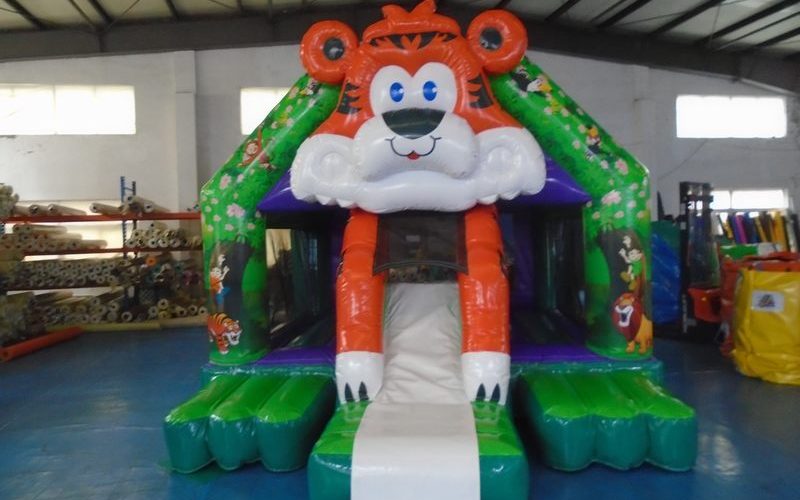
Two commercial bouncy castles are purchased in the same year. Five years later, one is still in excellent working condition, while the other has already needed several repairs.
Why such a difference?
The answer isn’t simply the quality of the original product. How often an inflatable is used, where it’s installed, how it’s handled between bookings and whether small problems are addressed early can all affect its working life.
For UK bouncy castle hire businesses, this matters because replacing equipment is a significant investment. Understanding what contributes to wear and when repairs are no longer worthwhile can help operators make better long-term decisions.
A commercial bouncy castle can remain serviceable for several years, but its age alone doesn’t determine whether it is safe to use. Condition, maintenance history and appropriate inspections are far more important.
Why There Is No Fixed Lifespan for a Bouncy Castle
It’s tempting to ask whether a commercial bouncy castle should last five, seven or even ten years. In practice, there is no universal answer.
Consider two hire businesses operating similar inflatables.
One company uses its castle mainly for weekend birthday parties during the warmer months. After each booking, the equipment is cleaned, dried and stored carefully.
Another business uses the same type of castle several times a week, frequently transporting it between venues and occasionally packing it away while damp.
Even if both inflatables were originally manufactured to the same standard, their condition could become noticeably different over time.
This doesn’t mean frequent commercial use is inherently damaging. Bouncy castles are designed for repeated operation. However, more use creates more opportunities for abrasion, handling damage and wear.
What matters is whether the equipment is operated within its limits and maintained appropriately throughout its working life.
The Parts That Matter Most for Durability
A bouncy castle may appear to be one large inflatable structure, but different sections experience different levels of stress.
The bouncing floor is particularly important. Each time children jump and land, the surface and its connections are subjected to repeated loading.
Entrance steps experience frequent contact as users climb in and out, while slide surfaces can gradually develop wear from regular use.
Structural seams also deserve attention. These connections help maintain the inflatable’s intended shape and distribute loads between different sections.
Most commercial bouncy castles use reinforced PVC-coated fabric, commonly around 0.55mm thick, although specifications vary.
Good durability depends on more than material thickness. Fabric quality, structural design, stitching and reinforcement must all be appropriate for the intended use.
A castle made with thicker PVC isn’t automatically more durable than one with a better-designed structure and suitable reinforcement.
Why Small Signs of Wear Shouldn’t Be Ignored
A minor scuff on a bouncing surface isn’t necessarily a serious problem. However, repeated abrasion in the same location may eventually affect the protective coating or underlying fabric.
Likewise, a small area of loose stitching may seem insignificant until further use places additional stress on the connection.
Other areas worth monitoring include anchoring points, inflation tubes and heavily used climbing features.
Not every visible mark requires repair, but damage that could affect the inflatable’s strength, stability or safe operation should be assessed by a competent person.
Early identification can sometimes prevent a manageable repair from developing into a more expensive problem.
How Daily Handling Affects Working Life
The inflatable’s condition isn’t determined only by what happens while children are bouncing.
Consider how often a hire operator moves equipment during a typical week.
The castle is unloaded, unfolded, inflated, deflated, folded again and loaded back into a vehicle. Depending on the size, several people may be needed to handle it.
Repeated dragging over rough surfaces can damage PVC coatings. Folding around the same sharp crease may create concentrated wear, while careless loading can affect attachment points or other components.
Ground conditions also matter.
An appropriate groundsheet or protective underlay can help reduce abrasion where required by the installation instructions. The inflatable must still be anchored correctly and installed on a suitable surface.
Careful handling may not be the most noticeable part of a hire business, but it can make a meaningful difference over several seasons.
Does British Weather Shorten a Bouncy Castle’s Lifespan?
Outdoor inflatables are regularly exposed to sunlight, moisture and changing temperatures.
Extended ultraviolet exposure can gradually affect some PVC materials, while repeated contact with wet ground introduces additional cleaning and drying requirements.
In the UK, damp conditions are a particular consideration for operators working through autumn and winter.
Storing a bouncy castle before it has dried properly can encourage mould, mildew and unpleasant odours. Prolonged moisture exposure may also contribute to material deterioration.
A suitable storage area should be clean, dry and protected from unnecessary heat and physical damage.
These precautions aren’t about keeping a castle looking new indefinitely. They’re about reducing avoidable deterioration that could shorten its useful working life.
Repair or Replace: How Do Operators Decide?
Not every damaged bouncy castle needs to be replaced.
Some localised fabric damage and stitching defects can be repaired using suitable materials and methods approved for the equipment.
However, the decision becomes more complicated when problems affect important structural areas.
Repeated seam failures, extensive fabric deterioration or damage preventing the inflatable from maintaining its required operating pressure may indicate that continued use is no longer appropriate.
There is also a practical business consideration.
Imagine an inflatable that requires several repairs during one season. Even if individual repairs are relatively inexpensive, the combined costs of repair work, transport and lost bookings may eventually make replacement more economical.
Operators should consider three questions:
- Can the equipment be restored to a safe, serviceable condition?
- Is the repair appropriate for the affected structure and supported by competent assessment?
- Does repairing the inflatable still make financial sense compared with replacement?
An inflatable with a safety-related defect should be taken out of service until it has been properly assessed and any necessary corrective work completed.
The ability to inflate a castle is not proof that it remains safe to use.
Why Inspection Records Matter More Than Age
For commercial bouncy castle operators in the UK, maintenance and inspection records provide more useful information than the manufacturing date alone.
For commercial bouncy castles covered by BS EN 14960, the UK Health and Safety Executive (HSE) advises that new equipment should undergo an initial test before entering service, followed by annual inspections by a competent person. The applicable inspection requirements depend on the type of inflatable equipment.
Recognised inspection arrangements may include PIPA or ADIPS, depending on the equipment.
Operators must also carry out appropriate checks before use and respond to defects identified between annual inspections.
An annual inspection doesn’t guarantee that a castle will remain safe for the following twelve months regardless of subsequent damage.
Keeping records of inspections, significant repairs and maintenance helps build a clearer picture of the inflatable’s condition over time.
For a business considering whether to retain or replace an older castle, this history can be particularly valuable.
What Does the Manufacturer’s Warranty Actually Tell You?
Warranty periods are sometimes confused with expected product lifespans, but they serve different purposes.
A manufacturer’s warranty generally covers specified defects for an agreed period, subject to its terms and exclusions.
It does not mean an inflatable will automatically become unusable once that period ends. Nor does it guarantee that the equipment will remain safe throughout the warranty if it is misused or poorly maintained.
For example, East Inflatables offers a two-year warranty on its commercial inflatable products, subject to the applicable warranty terms. That period relates to warranty coverage, not a fixed two-year working life.
An inflatable may remain serviceable well beyond its warranty period if its condition and inspections support continued use.
When purchasing equipment, operators should therefore distinguish between warranty protection, expected operating demands and the long-term responsibilities involved in maintenance.
Getting More Years from a Commercial Bouncy Castle
Extending an inflatable’s useful life is less about one special maintenance technique and more about consistently following good operating practices.
A well-managed hire business should use the correct blower, follow permitted user limits, maintain suitable anchoring arrangements and avoid operating equipment outside its specified conditions.
After events, cleaning, thorough drying and careful storage help reduce unnecessary wear.
Routine inspections can identify developing problems before they lead to more extensive damage.
These practices cannot eliminate normal ageing, and they cannot guarantee that a bouncy castle will last a particular number of years. They can, however, reduce avoidable deterioration and help operators make informed decisions about repairs and replacement.
For anyone running a commercial inflatable hire business, the goal shouldn’t simply be to keep a castle for as long as possible. It should be to maintain equipment that remains suitable, reliable and safe for its intended use.
A well-maintained five-year-old bouncy castle may still be a valuable part of a hire fleet. A poorly maintained two-year-old inflatable may already need significant attention.
Ultimately, the best measure of a commercial bouncy castle’s working life is not how many birthdays it has celebrated, but whether its condition, maintenance and inspection history support its continued safe operation.