
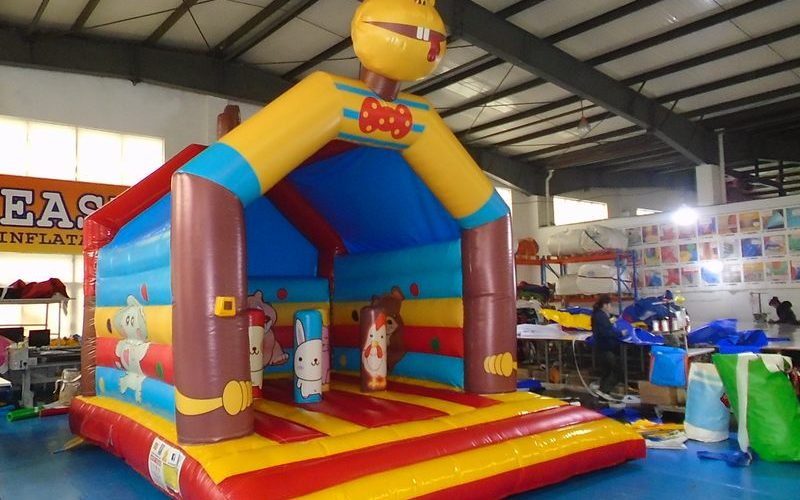
Have you ever wondered why the electric blower on a bouncy castle keeps running, even after the inflatable is fully inflated?
Unlike an air mattress or inflatable swimming ring, most commercial bouncy castles aren’t designed to hold air permanently. Instead, they rely on a continuous supply of air to maintain their shape and firmness.
The blower does more than inflate the castle. It maintains the air pressure needed to support children as they bounce and move around.
Understanding how this system works can help parents and event organisers recognise normal operation, identify potential problems and understand why the blower must remain running during use.
How Does a Bouncy Castle Blower Work?
Most commercial bouncy castles use a continuous-air inflation system.
An electric blower draws in air and pushes it through an inflation tube connected to the inflatable. As air enters, the castle expands until its walls, floor and other features reach their intended shape.
Once fully inflated, the blower continues supplying air to maintain the required internal pressure.
When children jump and land, the bouncing surface compresses slightly under their weight. The continuous airflow helps the structure maintain its firmness and recover its shape.
Without a sufficient air supply, the castle would gradually soften and could become unsafe to use.
This is why the blower must remain switched on whenever the inflatable is being used.
Why Does Air Escape Through the Seams?
If you’ve stood beside a bouncy castle, you may have felt air coming through the stitching.
This is usually normal.
Most commercial bouncy castles are made from durable PVC-coated fabric, with sections joined together using industrial stitching.
These stitched seams are strong but aren’t completely airtight. Small amounts of air escape during operation, and the blower continuously replaces the lost air.
However, normal air leakage shouldn’t be confused with damage.
A small amount of air escaping through stitched seams is expected. A large tear, disconnected inflation tube or unusually soft bouncing surface could indicate a problem.
If the castle begins to lose its shape or firmness, play should stop until the operator has checked the equipment.
What Happens If the Blower Stops Working?
If the blower stops unexpectedly, the inflatable begins losing internal air pressure.
How quickly it deflates depends on its size, construction and condition.
Some castles may lose their shape gradually, while others can become unstable more quickly.
This can create a safety risk, especially if children are still bouncing or using raised features.
If the blower stops during use, children should stop playing immediately and be directed to leave the inflatable safely.
The supervising operator should follow the manufacturer’s emergency procedures and ensure everyone has exited before investigating the problem.
The UK Health and Safety Executive (HSE) advises that play inflatables should retain sufficient shape and rigidity during deflation to allow users to escape safely.
For this reason, the deflation behaviour of the equipment is an important part of its safety assessment.
A blower should never be switched off simply to reduce noise or save electricity while children remain on the inflatable.
Do All Inflatable Attractions Need a Continuous Blower?
Not all inflatable equipment works in the same way.
There are two main types of inflation systems.
Continuous-Air Inflatables
Traditional bouncy castles, many inflatable slides and obstacle courses generally use continuous airflow.
Their stitched construction allows small amounts of air to escape, so an electric blower runs throughout use to maintain the required pressure.
This system is common in commercial inflatable play equipment.
Sealed-Air Inflatables
Sealed-air inflatables are designed to retain air after inflation.
They commonly use airtight materials and welded joints, allowing the inflation equipment to be disconnected once the correct pressure has been reached.
Examples include certain inflatable floating platforms and specialist recreational structures.
Although these products don’t normally require a continuously running blower, their internal pressure must still remain within the manufacturer’s specified limits.
The appropriate inflation system depends on the equipment’s design and intended use.
How Can You Tell If a Bouncy Castle Is Properly Inflated?
A bouncy castle may look fully inflated without necessarily having the correct internal pressure.
While a firm bouncing surface and properly shaped walls are positive signs, visual checks alone aren’t sufficient.
Professional operators should follow the manufacturer’s instructions for checking inflation pressure.
The UK HSE recommends using a suitable measuring instrument, such as a manometer, to check that the pressure remains within the specified operating range.
Other warning signs may include:
- An unusually soft or sagging bouncing surface
- Walls or inflatable features losing their shape
- A loose or damaged inflation tube
- Unusual noises coming from the blower
- Obstructions restricting the blower’s air intake
If any of these problems occur, the operator should assess the equipment before allowing play to continue.
Using the correct blower is also important. An unsuitable blower may fail to maintain the required pressure or otherwise affect safe operation.
What Should Parents and Event Organisers Look Out For?
Parents don’t need specialist technical knowledge to recognise some basic signs of safe inflatable operation.
Before children begin playing, the bouncy castle should appear properly inflated, with the blower operating and the inflation tube securely connected.
The equipment should be correctly anchored, and a responsible person should supervise its use.
Children should follow the permitted height and user limits, with larger and smaller participants separated when necessary.
If the inflatable becomes noticeably softer, loses its shape or develops an obvious problem, notify the operator immediately.
Parents should not attempt to adjust electrical equipment or repair the blower themselves.
For event organisers, choosing a professional hire company that carries out appropriate inspections and maintenance is particularly important.
Regular checks of the inflatable fabric, seams, blower and electrical connections help identify potential problems before they affect an event.
Final Thoughts
Most bouncy castles need a blower running continuously because their stitched construction allows small amounts of air to escape during normal use.
The blower replaces this air, maintaining the pressure needed for the inflatable to keep its shape and provide a suitable bouncing surface.
Although a little air escaping through the seams is normal, significant pressure loss or unexpected blower failure should always be taken seriously.
Understanding these basic principles helps parents and event organisers recognise why correct inflation, regular checks and proper supervision matter.
With suitable equipment, a reliable blower and responsible operation, a bouncy castle can provide an enjoyable experience for children at parties and events.